
Best Gold Bar Size to Buy (UK 2026): 1 oz vs 50 g vs 100 g vs 1 kg
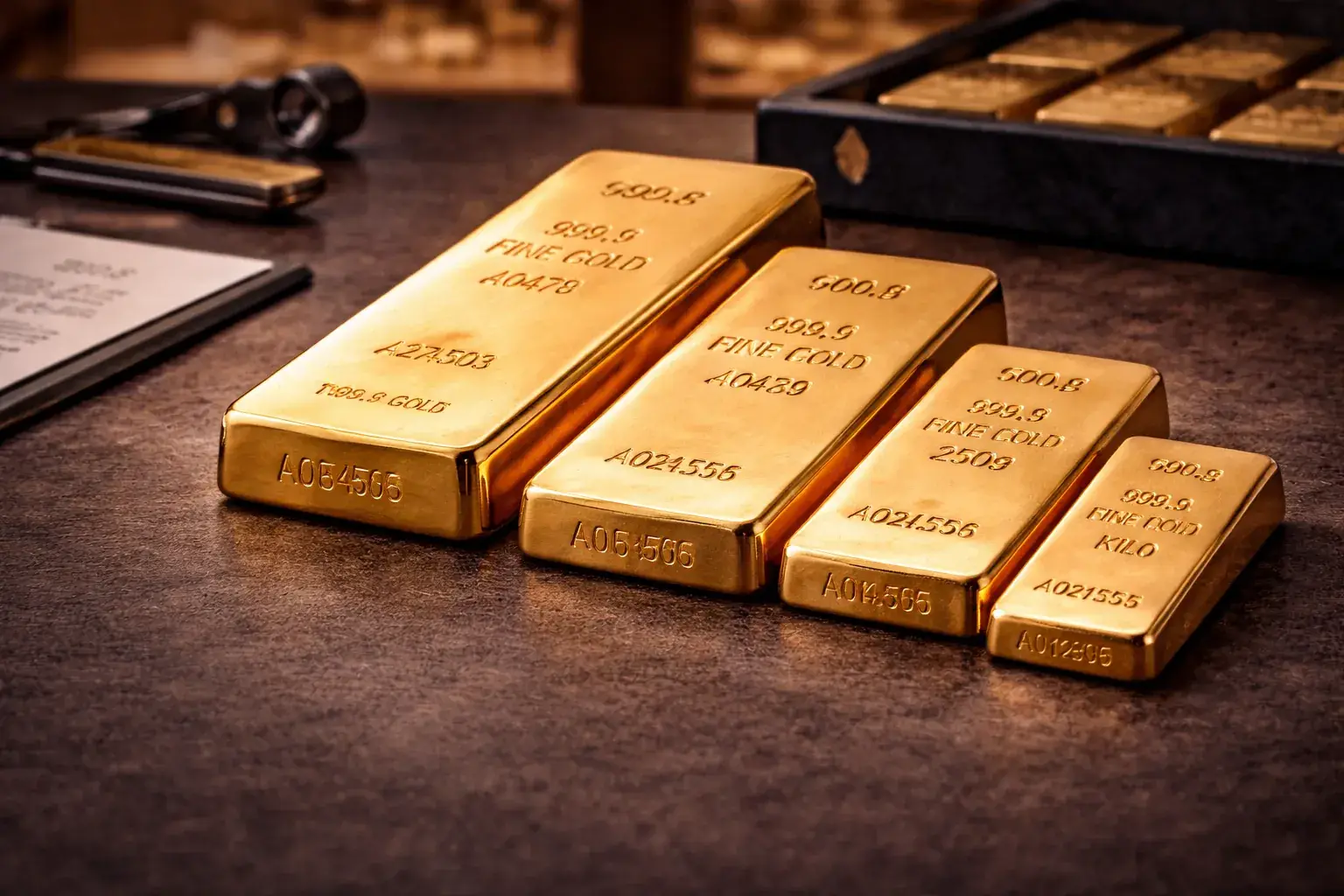
There is no single best gold bar size for every investor. The right size depends on your budget, your view on premiums, how much flexibility you want later, and how you expect to sell in the future.
This guide compares 1 oz, 50 g, 100 g, and 1 kg gold bars so you can choose the format that makes the most sense for your budget and strategy in the UK market.
Quick routes
If you want a live figure or a fast next step while reading, these are the most useful London Gold Centre pages to keep open alongside this article.
Why size changes the economics
Gold bars of different sizes still track the same underlying gold market, but the buying economics are not identical. Smaller bars usually carry a higher premium per gram because fabrication, packaging, and handling costs are spread over less gold.
Larger bars can therefore look more efficient if your only goal is to maximise metal for money. But efficiency is not the only metric that matters.
1 oz bars: the familiar middle ground
For many buyers, 1 oz bars sit in the most comfortable middle ground. They are standard, widely recognised, and often feel easier to compare than more unusual sizes. They also avoid some of the very high per-gram premiums seen on the smallest bars.
To compare bar weights, see our grams in a troy ounce guide.
If you want a bar that balances recognisability, flexibility, and straightforward resale, 1 oz remains one of the most popular routes.
50 g and 100 g bars: step-up sizes for serious buyers
50 g and 100 g bars are often where investors start thinking more seriously about premium efficiency. These sizes can work well if you want to allocate more capital without moving all the way into the largest cast-bar category.
They are also attractive to buyers who want fewer pieces to store while still keeping some flexibility if they choose to sell later.
When a 1 kg bar makes sense
A 1 kg bar is usually a specialist choice for larger allocations. It can offer strong premium efficiency, but it is a less flexible way to hold gold if you may want to sell in stages later.
For that reason, some investors split a large allocation across several bars instead of choosing one large bar. If flexibility matters, a mix of sizes can sometimes be the smarter compromise.
Use official sources where the rules matter
For tax, shipping, assay, and refiner standards, always confirm the latest official guidance before making a large decision. These external resources are the most relevant starting points for this topic.
Frequently asked questions
Is a 1 oz gold bar the best place to start?
For many UK buyers, yes. It often balances recognisability, liquidity, and premium better than very small bars.
Are 100 g bars cheaper per gram than 1 oz bars?
They often can be, but live pricing and stock conditions matter, so compare the actual premium at the time.
Should I buy one 1 kg bar or several smaller bars?
That depends on whether you prioritise efficiency or flexibility. Several smaller bars can be easier to sell in stages later.
Do bar brands matter more than size?
For many investors, size has the bigger long-term effect because it influences premium, storage, and resale flexibility.
Need a live quote or a practical next step?
Use the relevant calculator, visit Hatton Garden, or contact the team if you want help turning this information into a real buying or selling decision.