
ID & Paperwork to Sell Gold in the UK (2026): What to Bring In‑Store or When Posting
If you are planning to sell gold, jewellery, coins, or bars in the UK, one of the most practical questions is what paperwork you need. The right answer depends on the item, the value, and whether you are selling in person or by post.
This guide explains the documents buyers commonly ask for, why ID may be required, and how to prepare your items so the transaction moves more smoothly.
Quick routes
If you want a live figure or a fast next step while reading, these are the most useful London Gold Centre pages to keep open alongside this article.
Why buyers may ask for ID
Reputable buyers follow compliance procedures to protect both the business and the customer. That can mean asking for ID on higher-value or compliance-sensitive transactions, especially where payment method, item type, or transaction pattern makes verification appropriate.
It is better to think of this as part of a professional process rather than as an obstacle. If you know in advance that ID may be needed, you can prepare properly and avoid unnecessary repeat visits or delays.
What documents are commonly useful
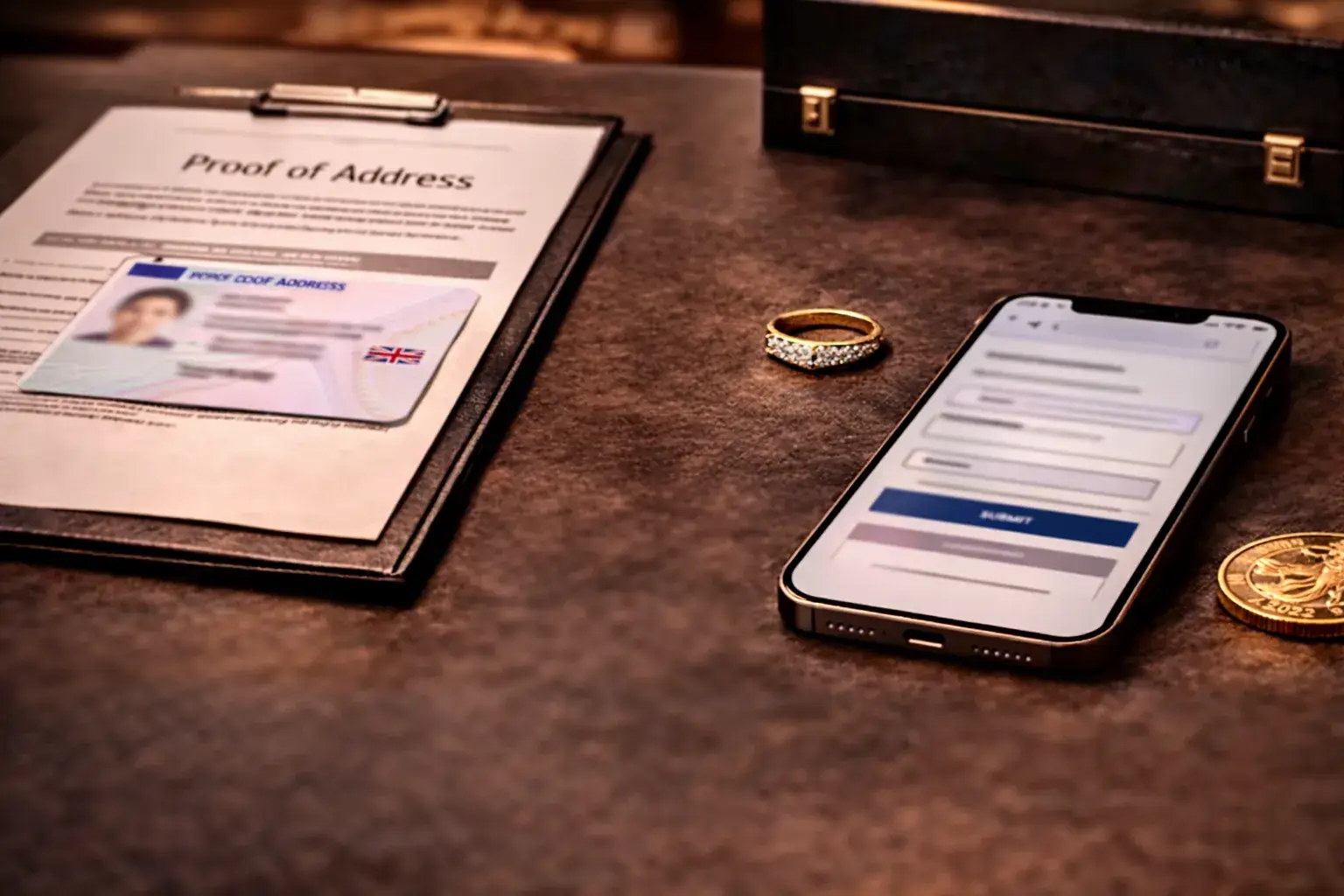
Photo ID and proof of address are the most common starting points. If you are selling bullion bars or coins, any helpful supporting paperwork such as receipts, assay cards, or original packaging can also make the route clearer, especially for recognisable investment products.
For jewellery or mixed scrap, formal paperwork is often less important than the items themselves, but it still helps to separate different item types and keep any supporting information available if you have it.
In-store versus postal selling
If you are visiting Hatton Garden, bring the items securely, together with any relevant paperwork and any ID you have been asked to provide. If you are posting items, contact the team first if the parcel is high-value, mixed, or includes bullion, and make sure you use an appropriate tracked route.
London Gold Centre’s ID Submission page, online selling page, and bullion-by-post guidance make the route clearer before you send anything.
How to prepare for a smoother transaction
Separate jewellery, scrap, coins, and bars where possible. Mention branded or certified items in advance. If a product has serials, assay packaging, or certificates, keep them with the item. Those small steps reduce confusion and help the buyer use the right valuation route from the beginning.
The result is usually a faster, more transparent conversation and fewer delays if identity or ownership questions need to be addressed.
Use official sources where the rules matter
For tax, shipping, assay, and refiner standards, always confirm the latest official guidance before making a large decision. These external resources are the most relevant starting points for this topic.
Frequently asked questions
Do I always need ID to sell gold?
Not always, but it may be required for larger or compliance-sensitive transactions, so it is wise to check in advance.
Should I bring receipts for bullion bars?
Yes, if you have them. Receipts, assay cards, and packaging can help clarify the route for bars and coins.
Can I post gold without speaking to the dealer first?
It is safer to contact the dealer first, especially for high-value, mixed, or bullion parcels.
What if I do not have paperwork for old jewellery?
That is common. Jewellery can still be assessed, although the buyer may rely more on testing and inspection than documentation.
Need a live quote or a practical next step?
Use the relevant calculator, visit Hatton Garden, or contact the team if you want help turning this information into a real buying or selling decision.